How to Avoid Scratching Your Omega Speedmaster Lugs When Changing Straps
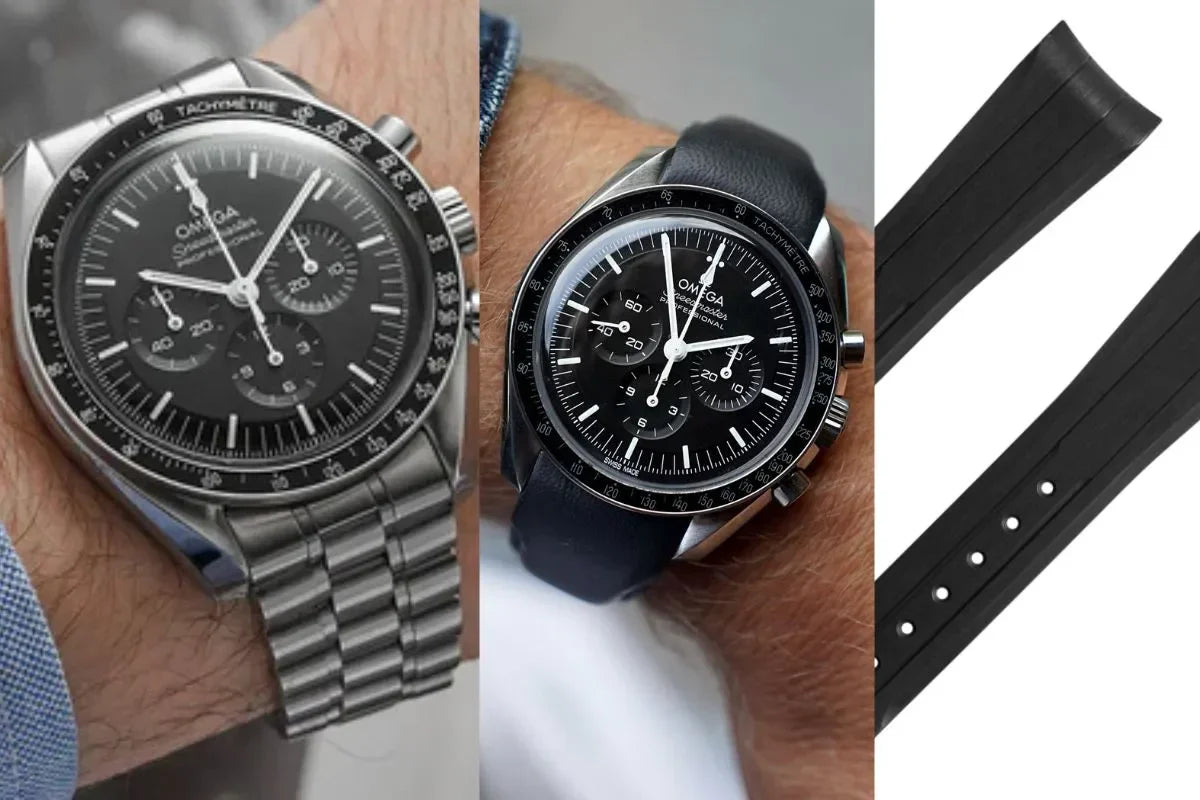
The Omega Speedmaster Professional is one of the best watches for strap rotation. On the bracelet, it feels like a classic tool chronograph. On black leather, it becomes cleaner, quieter and easier to wear with office clothing, travel outfits or weekend layers. The problem is simple: every strap change creates a small risk of scratching the lugs.
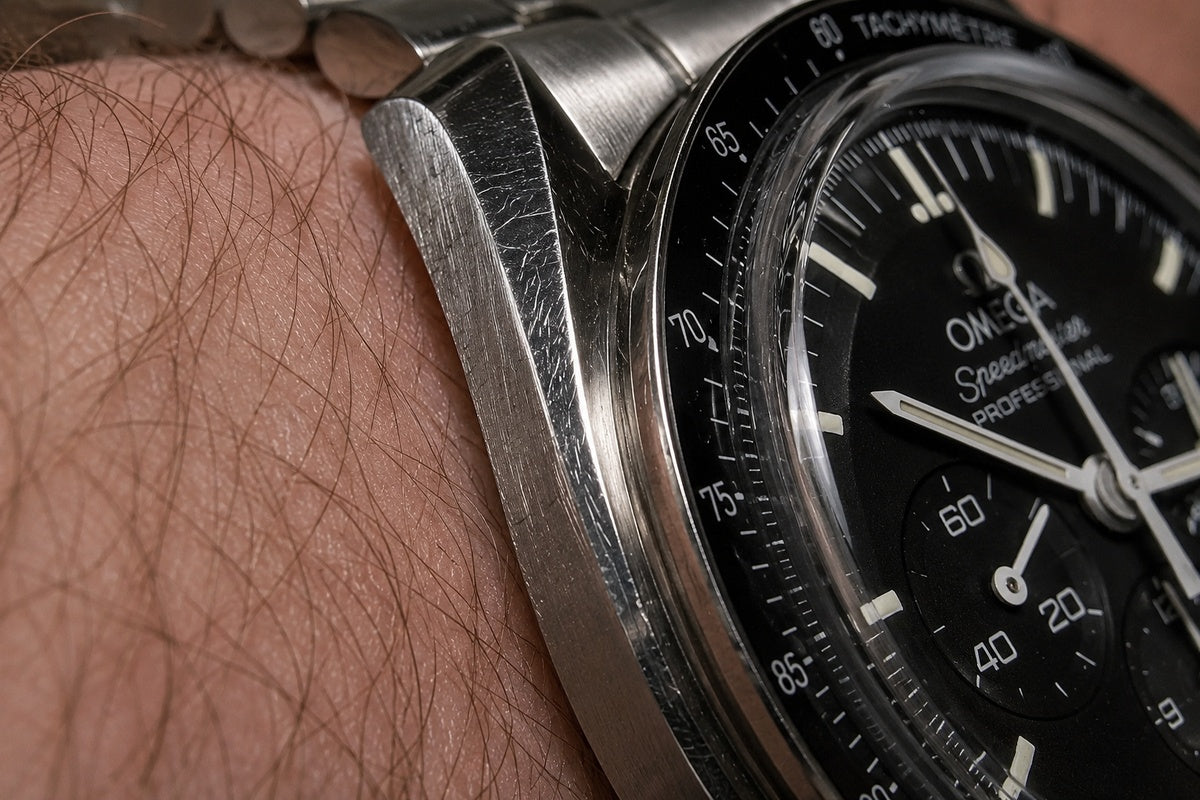
Most scratches happen on the underside of the lugs, where they are not visible on the wrist. Still, for many Speedmaster owners, the first scratch hurts. It is also frustrating when the damage comes from a rushed strap change rather than years of honest wear.
This guide explains how to reduce that risk before switching from bracelet to leather.
Why do Speedmaster lugs get scratched during strap changes?
Lug scratches usually happen when the spring-bar tool slips, when the spring bar is dragged along the inside of the lug, or when the strap is forced into place at the wrong angle.
The Speedmaster is especially tempting to change often because it works well on many strap types. That means more opportunities for small mistakes. The more often you remove the bracelet or strap, the more careful your method needs to be.
The common causes are:
- working too quickly
- using a poor or oversized spring-bar tool
- changing straps in bad light
- holding the watch in your hand instead of placing it on a soft surface
- pulling the strap before the spring bar is fully compressed
- installing a strap that is not made for the case
- assuming every Speedmaster strap fits every Speedmaster
The final point matters. “Speedmaster” is a family name, not a single case shape. Always check your exact model before buying or installing a strap.
Should lug scratches stop you from changing straps?
Not necessarily. Small marks on the underside of the lugs are common on watches that are actually worn and enjoyed. A Speedmaster is a practical chronograph, not a museum object.
The better question is whether the scratches are avoidable. A careless gouge from a slipped tool is different from normal signs of ownership. If you like changing between bracelet and leather, the goal is not to make strap changes impossible. The goal is to make them controlled.
If you are extremely sensitive to marks, ask a watchmaker to handle bracelet removal and strap fitting. If you are comfortable doing it yourself, slow down, prepare properly and use the right strap setup.
What tools reduce the risk?
A proper spring-bar tool helps. The tip should be fine enough to reach the spring-bar shoulder without scraping the lug wall. A cheap tool with a blunt or loose fork can do more damage than good.
Use a soft surface under the watch. A microfiber cloth, watch pad or folded clean towel is better than a desk, countertop or tray. Good lighting matters too. Most scratches happen when people are working at an awkward angle and guessing where the spring bar is seated.
Protective tape can also help. Place a small piece on the underside of the lugs near the spring-bar holes before removing the bracelet or strap. Use clean, low-residue tape and remove it after the change. Do not rely on tape as an excuse to rush; it is a backup, not the method.
If the spring bar feels stuck, stop. More pressure is usually how scratches happen.
How can quick-release spring bars help?
Quick-release spring bars reduce the need to put a metal spring-bar tool close to the lugs every time you change straps. Instead of compressing the spring bar from the outside with a tool, you use a small lever on the underside of the strap.
That makes them useful for owners who rotate straps often. For example, you might keep the bracelet on your Speedmaster during a busy week, then switch to leather for dinner, travel or office wear.
Quick release does not remove every risk. The strap still needs to be the correct width, the spring bars still need to seat fully, and the strap still needs to match the case. A quick-release strap that is badly sized or poorly seated is not safe just because it is convenient.
For a deeper explanation, read our guide: Are Quick-Release Spring Bars Safe for Rolex & Omega?. The short version for Speedmaster owners is this: quick-release is helpful when the strap is model-correct, well made and checked after installation.
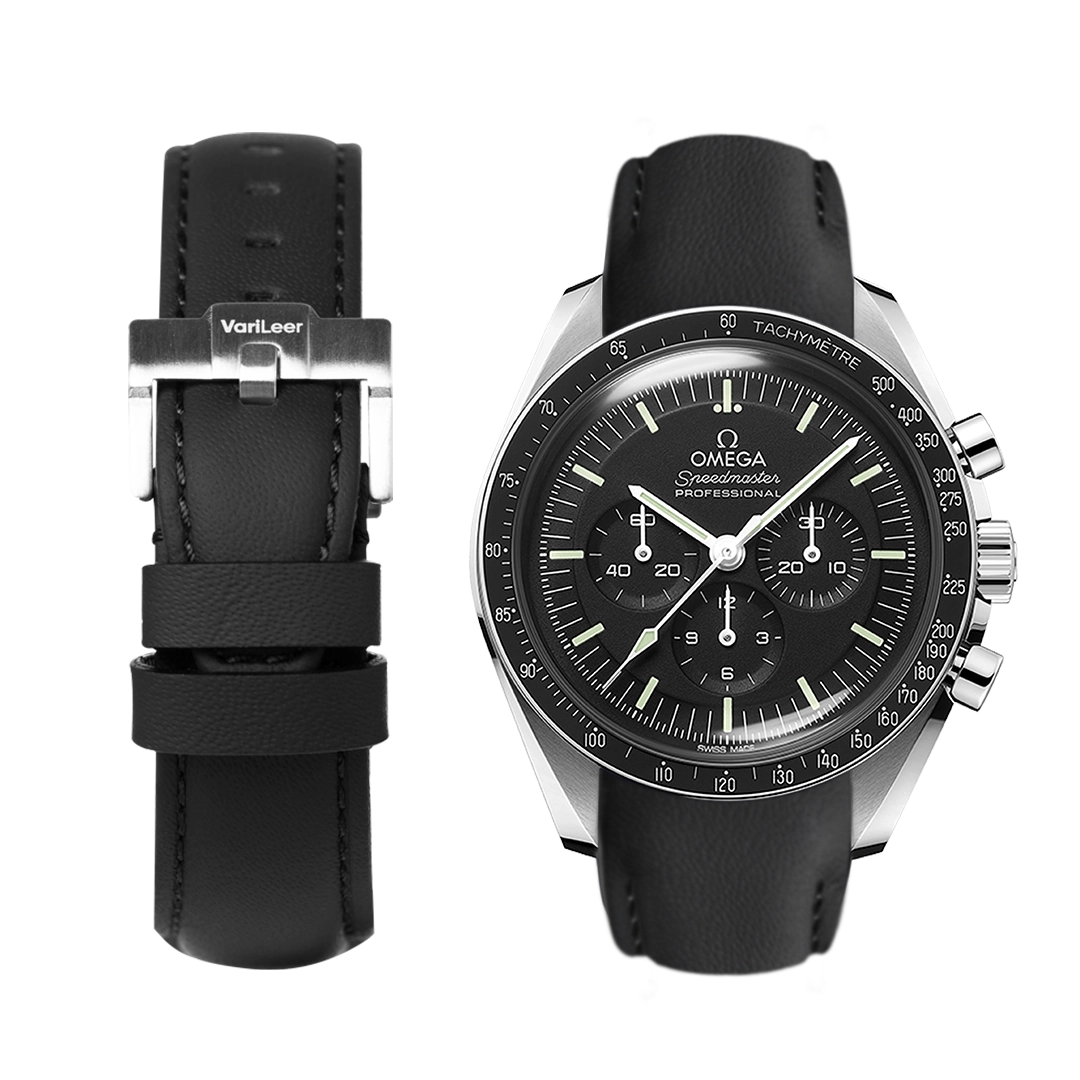
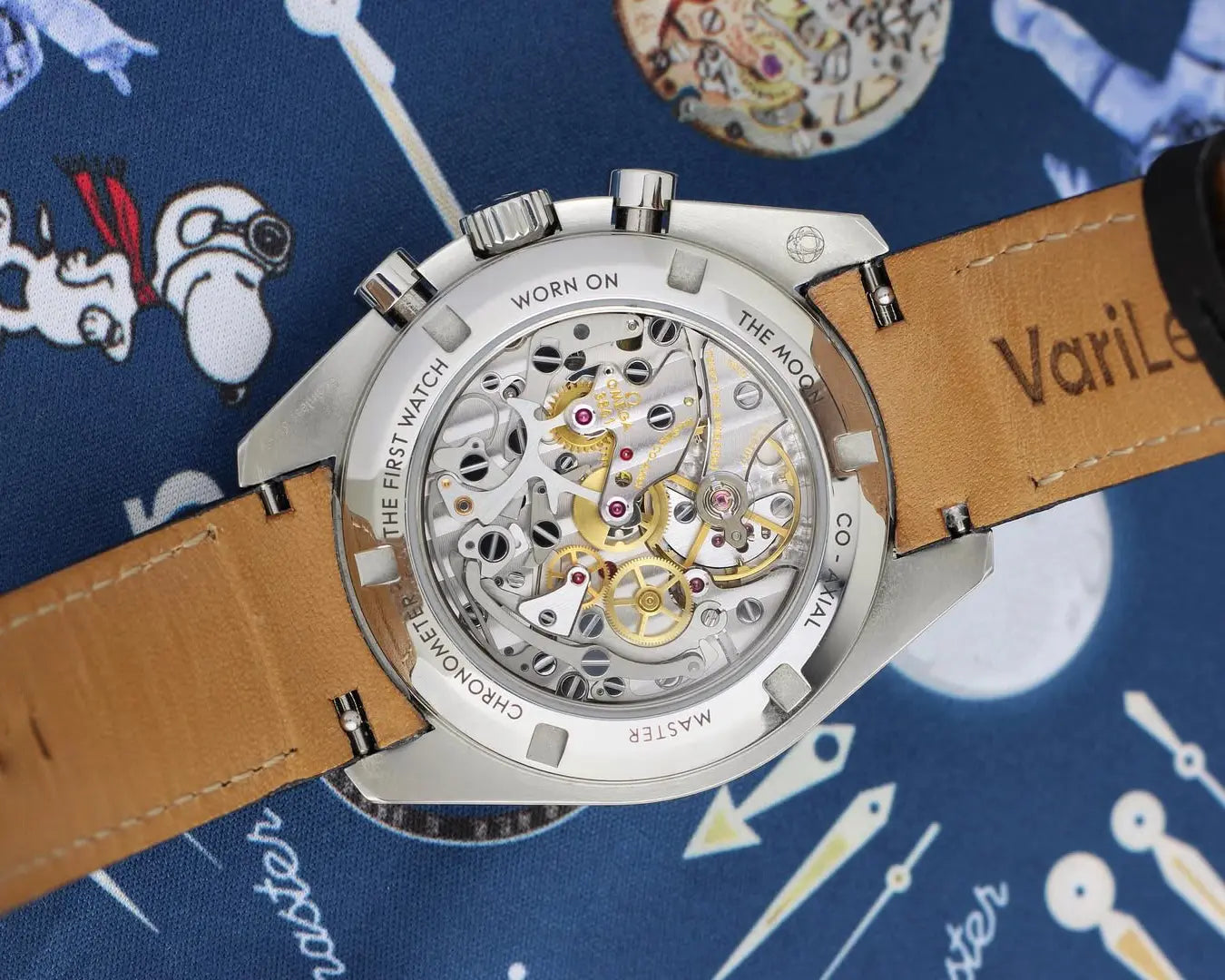
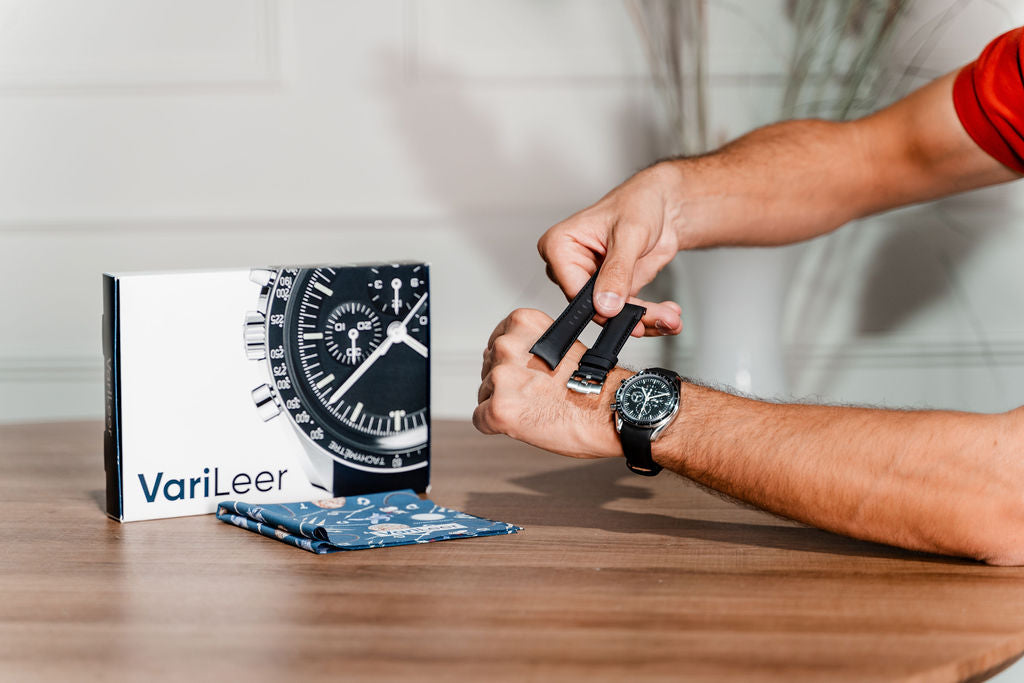
This is the reason our Speedmaster Professional strap uses quick-release spring bars. Once the original bracelet has been removed, you can fit or remove the leather strap without repeatedly placing a metal spring-bar tool against the lug backs. That does not make the process scratch-proof, but it does remove one of the most common causes of accidental marks during regular strap rotation.

What should you check before fitting a leather strap?
Before installing a leather strap, check compatibility first. Do not start with the tool. Start with the watch.
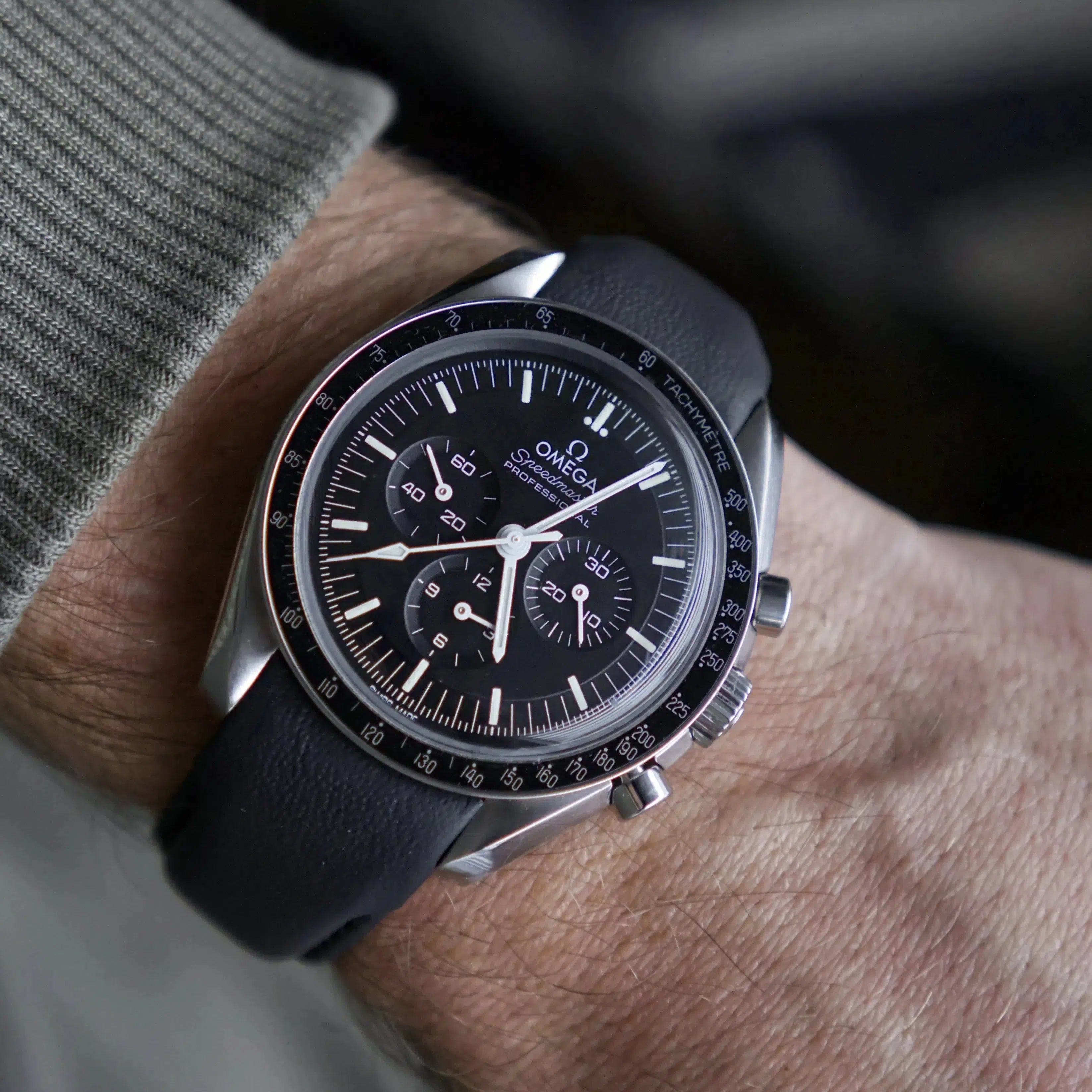
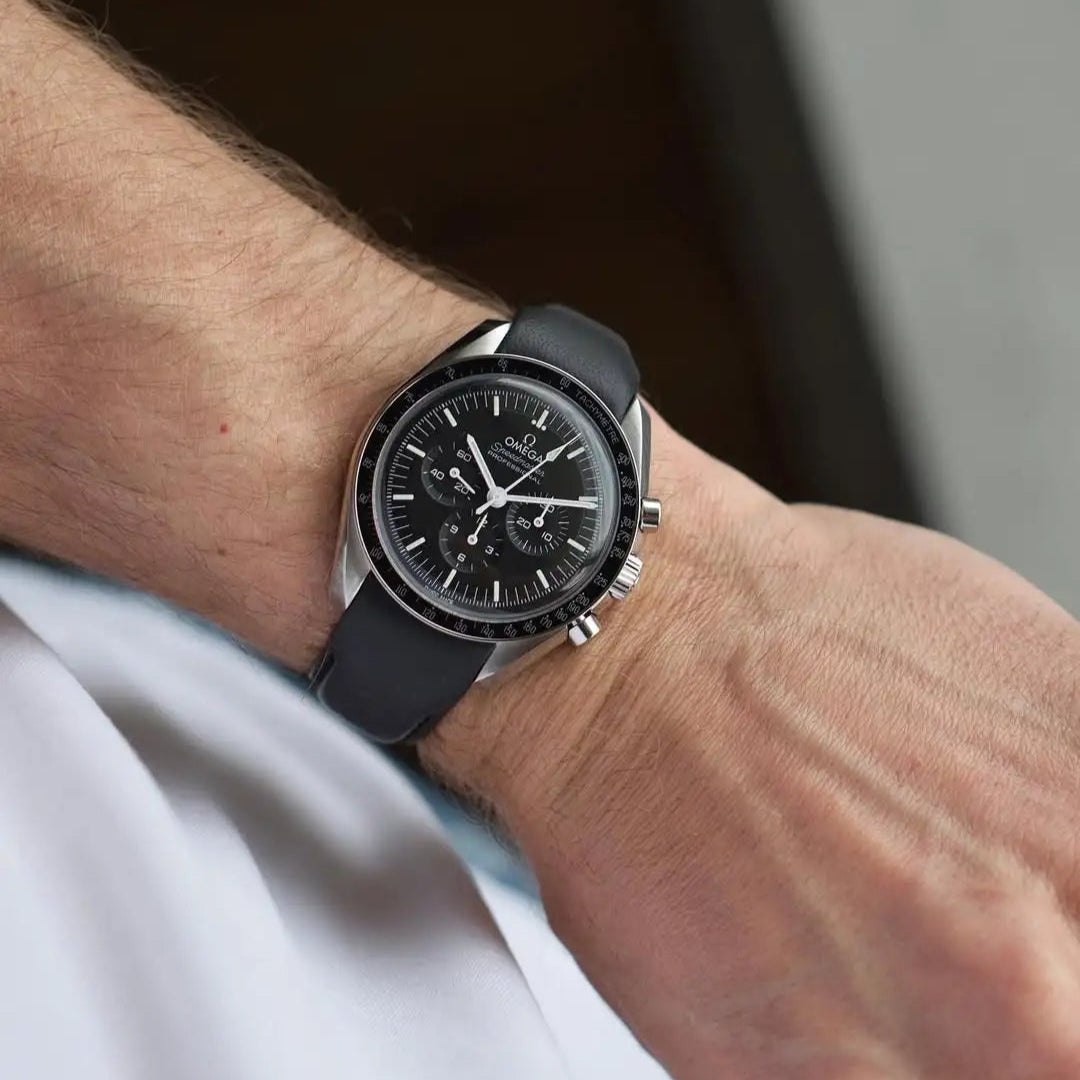
Our curved-end leather strap for Omega Speedmaster Professional is made specifically for the Speedmaster Professional case. The curved end is designed to follow the case line, while the quick-release spring bars help you avoid repeated tool contact with the lug backs during normal strap changes.
It is not a universal Speedmaster strap. It does not fit Speedmasters with straight lugs, 19mm lug width or watches that need curved spring bars, for example.
That warning is important. If your watch has a different case, forcing the strap can damage the lugs, distort the spring-bar angle or create an insecure fit.
Before fitting the strap, check:
- your exact Speedmaster reference
- the lug width
- whether your watch has straight or twisted lugs
- whether the strap is designed for your case shape
- whether the spring-bar ends line up naturally with the lug holes
- whether the curved end sits between the lugs without pressure
A curved-end leather strap should follow the case line cleanly. It should not look like a straight strap being pushed under the case.
How should you install the strap safely?
Start by clearing your workspace. Place the watch dial-down on a soft, clean surface. Work slowly and keep the lugs visible.
If you are removing the bracelet, compress one end of the spring bar and move the bracelet end link away gently. Do not pull hard while one side is still seated. That is when the bar can drag across the inside of the lug.
When installing a quick-release leather strap, compress the lever before positioning the strap between the lugs. Seat one end of the spring bar first, then guide the other end into the opposite lug hole. Release the lever only when the bar is aligned.
After installation, do not put the watch straight on your wrist. Check it first:
- gently tug each strap half away from the case
- look at both lug ends from the side
- make sure the strap sits evenly
- check that the quick-release lever is not stuck halfway
- flex the strap slightly to see whether anything shifts
- inspect the case-to-strap transition
If the strap clicks, moves unevenly or feels vague, remove it and reinstall it. A strap change is not complete until the spring bars are seated and the strap feels secure.

When should a watchmaker do it?
Ask a watchmaker if the bracelet is tight, the spring bars are difficult to compress, the lugs are already marked, or the watch is especially important to you.
You should also avoid doing it yourself if you are unsure about compatibility. This is especially relevant with Speedmaster variants outside the standard Professional case family. Straight-lug Speedmasters, 19mm-lug models and watches that require curved spring bars need extra care.
A good watchmaker can usually change a strap quickly and safely. That small cost is easier to accept than a deep scratch from a tool slip.
Final checklist before wearing the watch
Before wearing your Speedmaster after a strap change, run through this quick checklist:
- The strap matches your exact Speedmaster model.
- The spring bars are the correct width.
- Both ends of each spring bar are fully seated.
- The strap sits straight between the lugs.
- The curved end follows the case without a large gap.
- The quick-release lever is fully released and not trapped.
- The strap does not twist or pull at an angle.
- The watch feels secure when gently tugged over a soft surface.
- The bracelet and original spring bars are stored safely.
- You stop wearing the watch immediately if anything feels loose.
A leather strap can make the Speedmaster Professional more comfortable and more versatile, especially for dry daily wear, office use and travel. The key is not changing straps as fast as possible. The key is changing them carefully, with a strap that is actually made for the watch.


Written by Thomas (Owner and watch enthusiast)